The 2 August 2027 eclipse in Martil
Total eclipseof night in broad daylight
In Martil, the Moon completely covers the Sun from 09:45:15 to 09:50:07 local time: 4 min 52 s of night in broad daylight. The Sun will be 39° above the horizon, towards the east. It is among the 10 longest totalities of the 39 places we track.
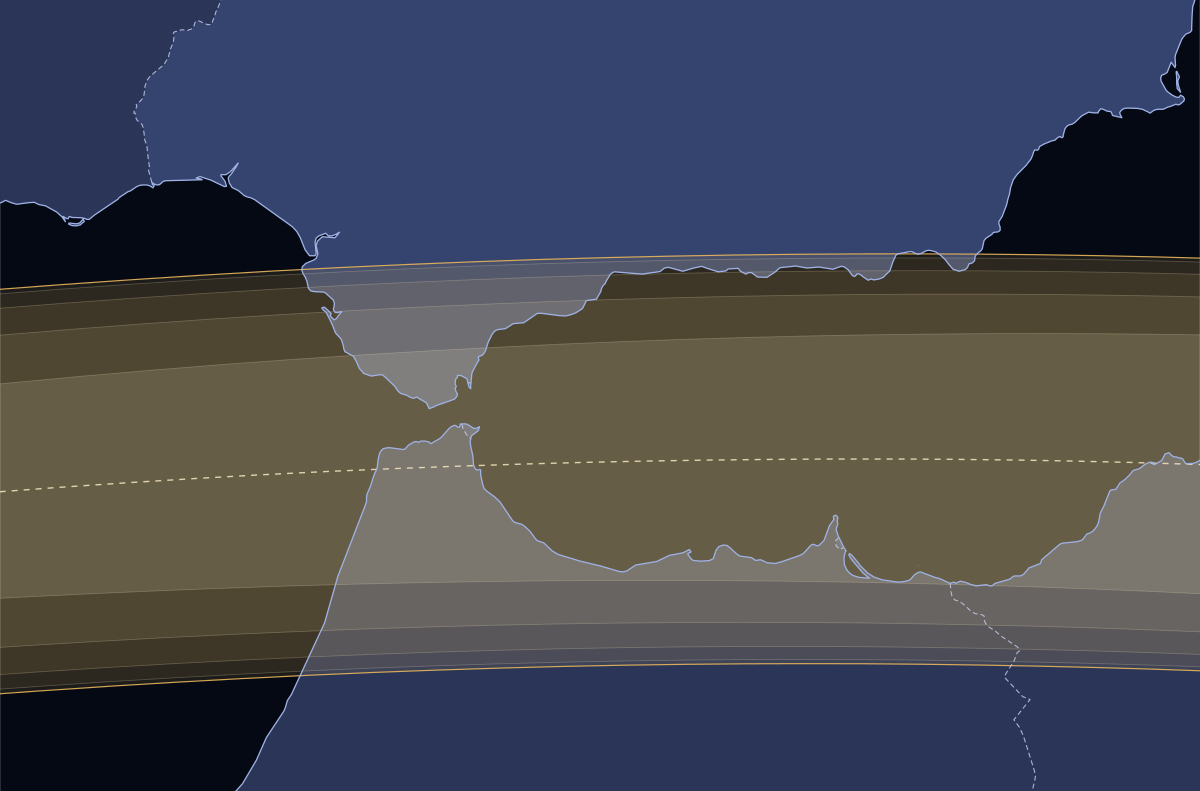 Martil
- Totality begins
- 09:45:15
- Totality ends
- 09:50:07
- Duration of totality
- 4 min 52 s
- Time zone
- Morocco · UTC+1
- Sun altitude
- 39°
- Sun direction
- east
- Distance to the centre line
- 11 km
Sky outlook
Best avoided on the day
Between Martil and El Jebha, marine cloud gets trapped against the Rif mountains. Jay Anderson advises avoiding this coast on eclipse day and heading to Tetouan’s eastern districts or inland.
Values computed from the eclipse path, ± 15 s
Recommended viewing sites
Getting there and around
On the day, the weather decides. Being able to drive 20 to 50 km towards clear sky, without leaving the band, often makes the difference: a car is the best plan B.
A car rented in Spain usually cannot be taken into Morocco: cross on foot by ferry and rent on arrival.
Open the animated map
Tap any spot to get the exact time where you will be.
Protect your eyes
Wear glasses certified to ISO 12312-2 throughout the partial phase. Take them off only during totality, and put them back on as soon as the light returns.
Frequently asked questions
What time is the eclipse in Martil?
Totality begins at 09:45:15 and ends at 09:50:07 (Morocco · UTC+1). The partial phase starts about an hour and a quarter before and ends an hour and a quarter after.
How long does totality last in Martil?
4 min 52 s. The closer you are to the centre line, the longer it lasts: up to 4 min 53 s in northern Morocco.
Do I need special glasses?
Yes. Looking at a partially eclipsed Sun without protection burns the retina. Use glasses certified to ISO 12312-2. Sunglasses do not protect you.